A week ago, Saudi Arabia was reportedly part of a Paramount Skydance bid to acquire Warner Bros Discovery.
The country’s ambition to own a piece of the Hollywood studio was dashed on Friday by Netflix winning the bidding process with a $72 billion offer, but the deal was very much a talking point at its Red Sea Film Festival on Saturday.
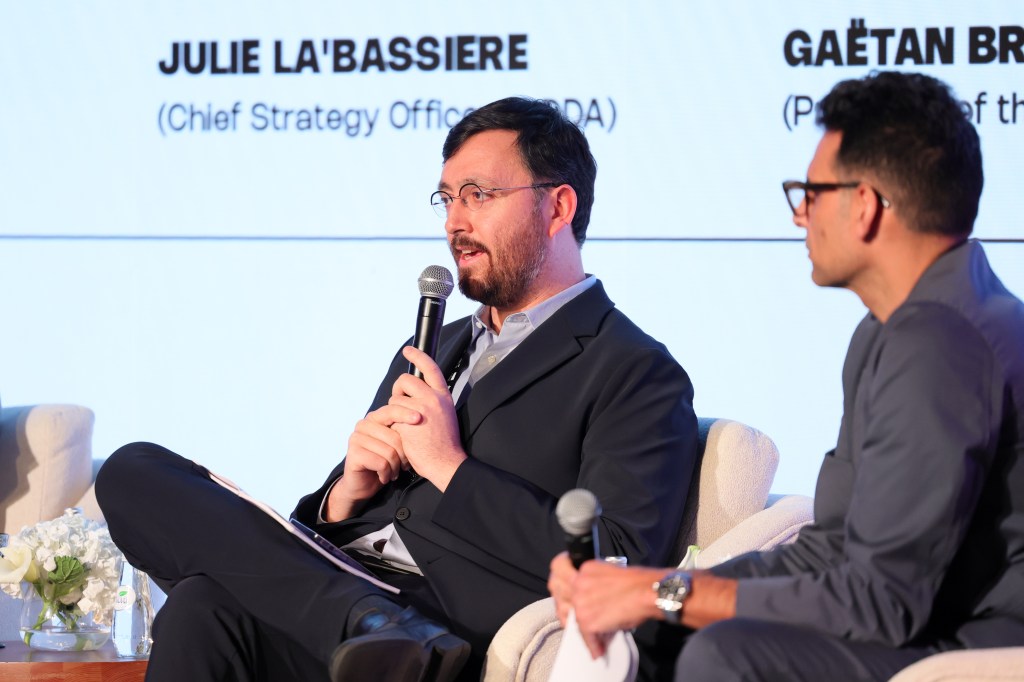
International execs participating on a Red Sea Souk panel on ‘Futureproofing our Industry’, steered by Library Pictures International David Taghioff, shared their thoughts on the deal as a preface to the main topic of the discussion.
Not surprisingly, Gaetan Bruel, president of France’s National Cinema Centre (CNC) was less than enthusiastic about Netflix owning WDB.
France and Netflix have long had a thorny relationship, with the streamer subject to a 15-month window in return for extra investment in local feature films, and essentially shut of the Cannes Film Festival’s competition which only accepts films that are guaranteed for a theatrical release.
“I’ll make my comment from the theatrical point of view because as you know there are thousands of exhibitors in the U.S., France, across the world who expressing deep concern about the potential consequence of this acquisition,” he said.
“The fear they express is that it that it might reduce the number of films for theatrical release which is exactly what happened, we all remember, when Disney acquired Fox,” he said.
He continued that there were two aggravating factors.
“The first one is Netflix’s long time ambivalent relationship with cinema. The second one, being the dramatic decline in theatrical attendance,” he said. “If we think not in box office, but attendance. In 2019 we sold worldwide 8 billion tickets. Last year it was less than 5 billion. So, it’s a drop of 40%.”
Bruel suggested that Netflix had embraced putting films into cinemas to a certain extent, but only as a marketing tool because it had understood the additional revenue a theatrical release can bring through “prestige”, “community engagement” and the “media echo”.
“But I wouldn’t say that Netflix so far has given the theatrical business what it truly needs to navigate this moment of crisis, which is a minimal windowing system, a minimal exclusivity.”
“When you release Frankenstein with just one week in movie theatres in the U.S. how can you expect movie theatres to just survive in this moment,” he asked.
Bruel quoted one line from Sarandos’ first comment after the acquisition in which he said: ‘I think over time the windows will evolve to be much more consumer friendly.
“I think we should ask in return, what about making the cinema windows more exhibitors friendly so that they can just keep existing and doing what they do. As we say in English, you cannot have the cake and eat it.”
“If we all believe in movie theatres, we really think we really need to think what they need. Not only variety of content, but also a minimal windowing, minimal exclusivity.
“So my two cents will be first, I imagine that the acquisition is not a good news when it comes to the number of movies, and I believe it’s about to reduce and to rationalise a bit the slate of films. On the other hand, it might get Netflix closer to the theatrical ecosystem, which could be in this case could be pretty good.”
